


For decades, outsiders have often described Orlando’s economy primarily through one industry: Tourism.
Tourism remains critically important to Central Florida, but that description increasingly tells only part of the story.
Central Florida’s economy now includes growing clusters in healthcare, advanced manufacturing, aerospace, defense, simulation, technology, financial services and professional services. For real estate owners and investors, that diversification matters.
Why Economic Diversity Matters
Imagine a town where almost everyone works for the same industry. If that industry slows down, housing demand can decline quickly.
A diverse economy is generally more resilient because employment comes from multiple sources. A multi-sector market creates a stable foundation for:
- Homeownership
- Rental demand
- Commercial development
- Local spending
- Population growth
Advanced Manufacturing Is Expanding
In August 2026, Seminole County-based Hernon Manufacturing announced a $2.8 million investment in a new facility in Sanford, expanding by roughly 13,000 square feet. Earlier in 2026, another advanced manufacturing and logistics center in Sanford was fully leased upon completion.
Manufacturing facilities create high-wage jobs, require local suppliers, generate transportation activity, and expand the commercial tax base.
Healthcare and Life Sciences Are Growing
Novartis announced plans for a roughly 35,000-square-foot radioligand therapy manufacturing facility in Winter Park, expected to create approximately 50 highly specialized jobs.
Life-science and medical projects attract specialized talent and suppliers, helping build industry clusters that evolve regional real estate values.
Technology & Aerospace Momentum
Central Florida benefits from long-standing aerospace, defense, and simulation industries. In 2026, the Florida Semiconductor Engine advanced in a National Science Foundation initiative for federal innovation funding.
These sectors support engineers, technicians, and software developers who actively drive local housing demand.
Corridors Matter More Than Boundaries
Real estate buyers think in ZIP codes, but employees think in commute times. Growth in Central Florida is increasingly regional across corridors:
- Lake Mary Jobs: Draw buyers to Sanford, Longwood, Heathrow, Altamonte Springs, or Volusia County.
- Lake Nona Jobs: Drive demand across Orlando, Kissimmee, St. Cloud, and Osceola County.
The Housing Supply Question
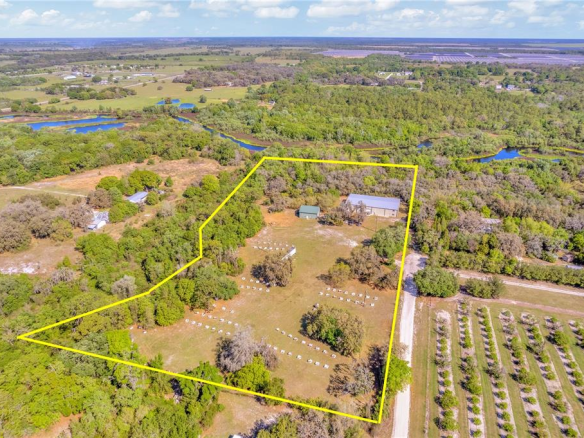
If jobs grow where housing supply is constrained, property values feel a stronger upward push. Key land constraints include:
- Limited vacant land
- Wetlands & Zoning
- Density limits
- Infrastructure capacity
- Transportation bottlenecks
- Development restrictions
Follow Industries, Not Just Companies
Individual corporate announcements make headlines, but market analysts look for long-term industrial patterns:
- Are multiple healthcare or life-science companies choosing the region?
- Are advanced manufacturers expanding facilities?
- Are technology and defense firms actively recruiting here?
- Are corporate headquarters relocating into Central Florida?
When several companies in related industries invest in the same region, they create an economic ecosystem—which is far more significant to long-term housing demand than any single isolated employer.
The Bottom Line
Central Florida should no longer be viewed solely as a tourism economy. Tourism is one pillar, alongside healthcare, advanced manufacturing, technology, professional services, and defense.
For homeowners and real estate investors, economic diversification creates something deeply valuable: more reasons for people to live here.
Over the long term, sustainable housing demand begins with exactly that.


Join The Discussion